



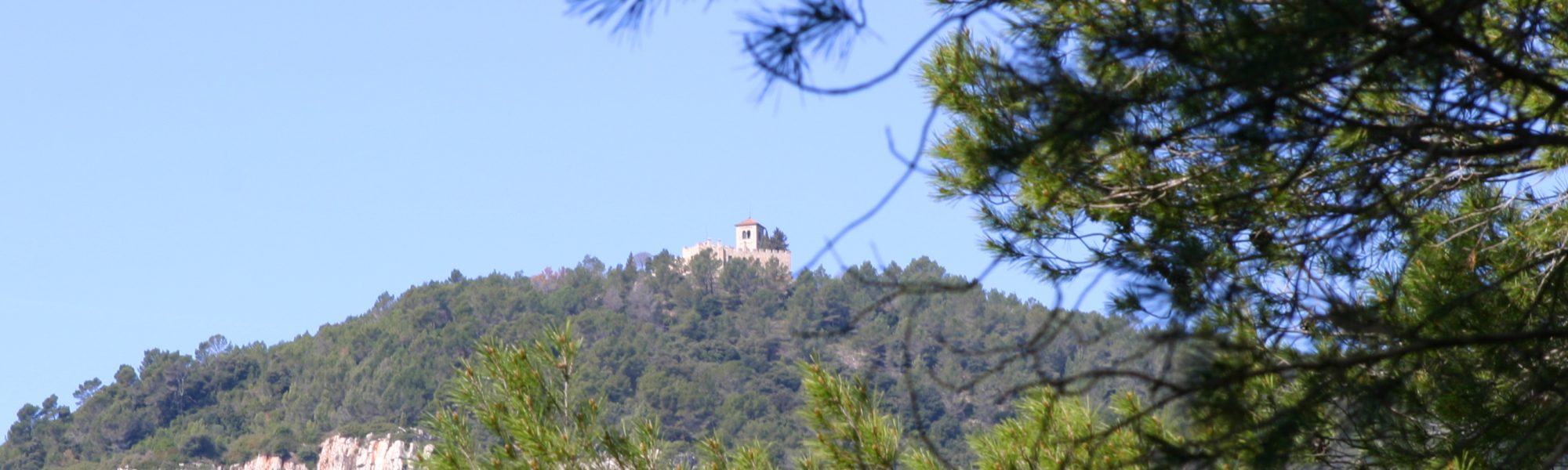
Between the Vallès plain and the first foothills of Sant Llorenç del Munt, Castellar del Vallès has always maintained a close relationship with its surrounding landscape.
The River Ripoll crosses the municipality from north to south and has been a source of life and economic activity for centuries. Its waters supplied market gardens, mills and factories, leaving behind a valuable heritage linked to water. As you walk around Castellar, you will discover traces of its history, from its medieval churches and the Castell de Clasquerí to the industrial legacy of the Tolrà family and the Neo-Gothic silhouette of the Church of Sant Esteve, popularly known as the “Cathedral of the Vallès”.
This full-day itinerary combines nature, heritage and local food. Discover the municipality first from the panoramic heights of Puig de la Creu and then on a leisurely walk through the most emblematic places in its old town.

Getting there by public transport:
There are bus connections from Sabadell and Barcelona. Check the latest routes and timetables before setting off.
Plan your journey with Mou-te, Catalonia’s public transport journey planner →
Morning: hike up Puig de la Creu
Put on your walking boots and start the day at Era d’en Petasques, a short distance from the centre of Castellar. The circular Puig de la Creu route starts here: a 5.5-kilometre walk with 360 metres of elevation gain that leads through the woodland and paths of the first foothills of Sant Llorenç del Munt.
Along the way, you will discover the Bosc de Pedres (“Stone Forest”) and several traditional dry-stone huts, reminders of a landscape shaped by generations of human activity. At the summit, 667 metres above sea level and included in the Catalan Mountaineering Federation’s 100 Cims challenge, stands the Church of Santa Maria del Puig de la Creu, a chapel of medieval origin that has been restored over the centuries. From this magnificent viewpoint, you can enjoy sweeping views across the Vallès plain, Sant Llorenç del Munt and Montserrat and, on clear days, as far as Barcelona and the Mediterranean Sea.
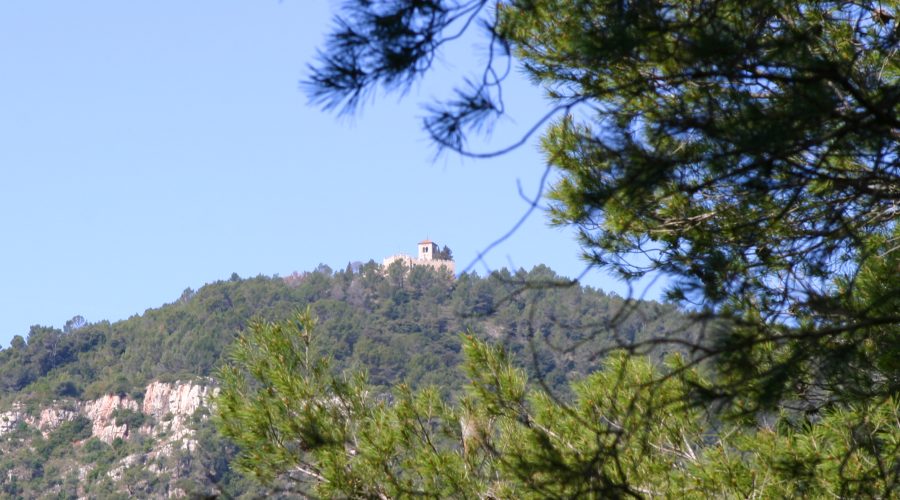
A mountain steeped in legend
This place also forms part of the popular folklore of the Sant Llorenç del Munt massif. According to legend, a fearsome víbria—a dragon-like creature from Catalan folklore—terrorised the villages around Sant Llorenç del Munt until Count Sunifred of Barcelona managed to wound it. The dragon fled to Puig de la Creu, where it eventually died after falling into the Sot de Goleres ravine.

What to try in Castellar:
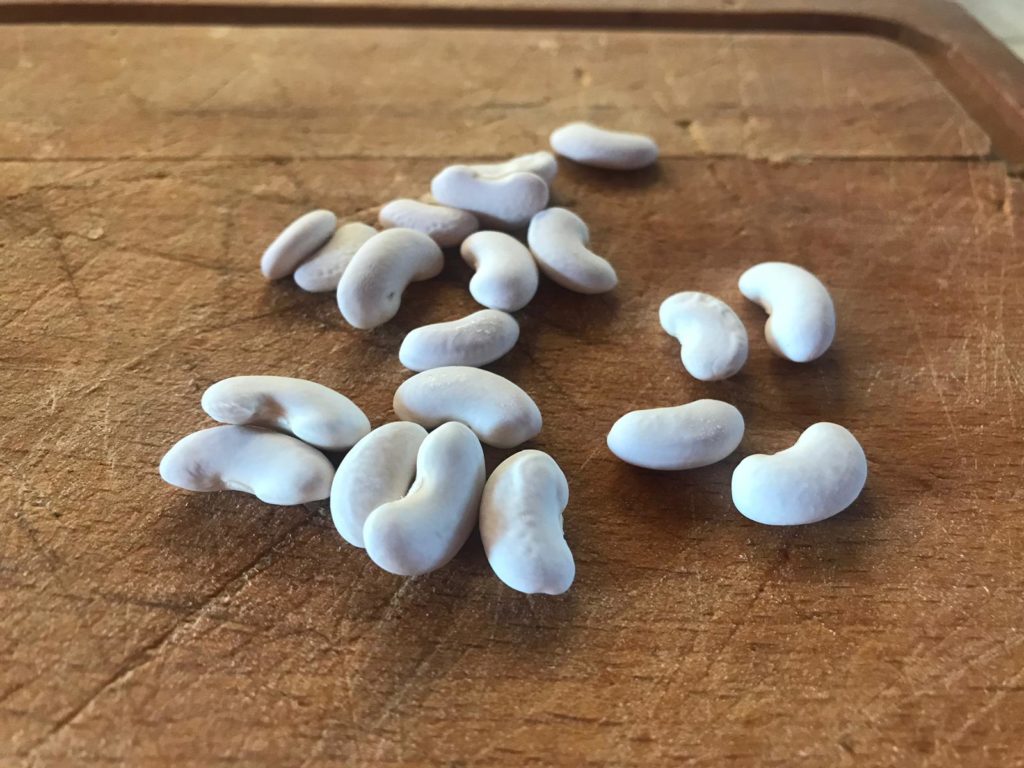
Back in the town centre, take the opportunity to discover Castellar’s local flavours. Mongeta del Ganxet, a protected local variety of white bean with a creamy texture and delicate flavour, is an emblem of the Vallès region’s farming heritage and traditional cuisine, as are wild mushrooms in autumn. For dessert, try the classic Villarín from Pastisseria Villaró or the Montserratina from Pastisseria Muntada, subject to availability.
Afternoon: a stroll through the old town
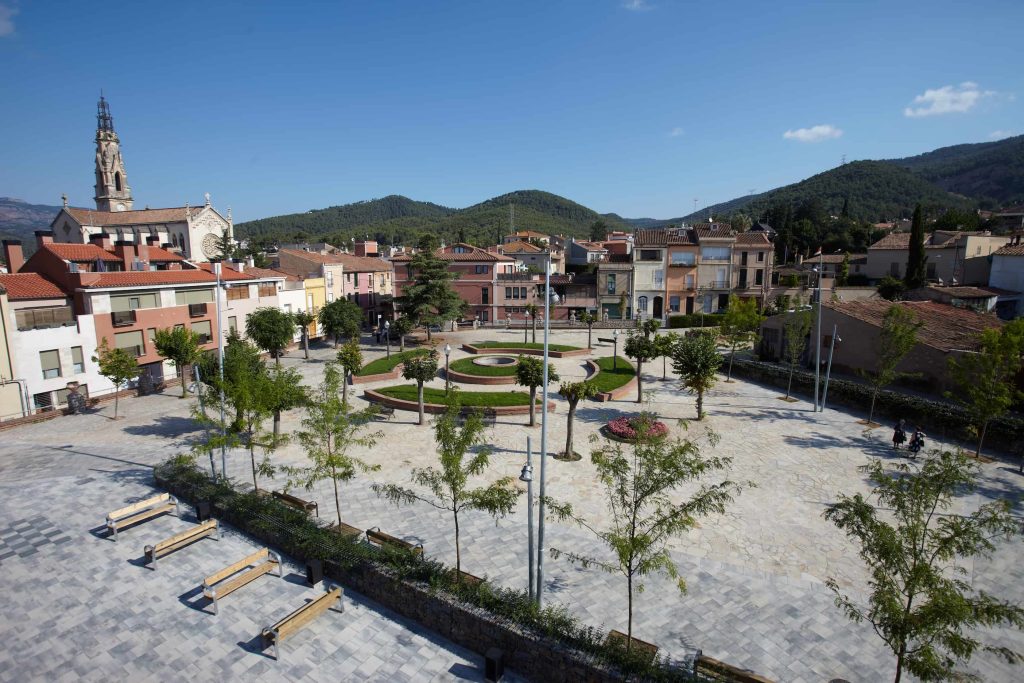
After lunch, set off again on a leisurely walk through the historic centre. The circular route begins in Plaça Major and takes you past some of the places that best explain how Castellar has changed over the centuries.
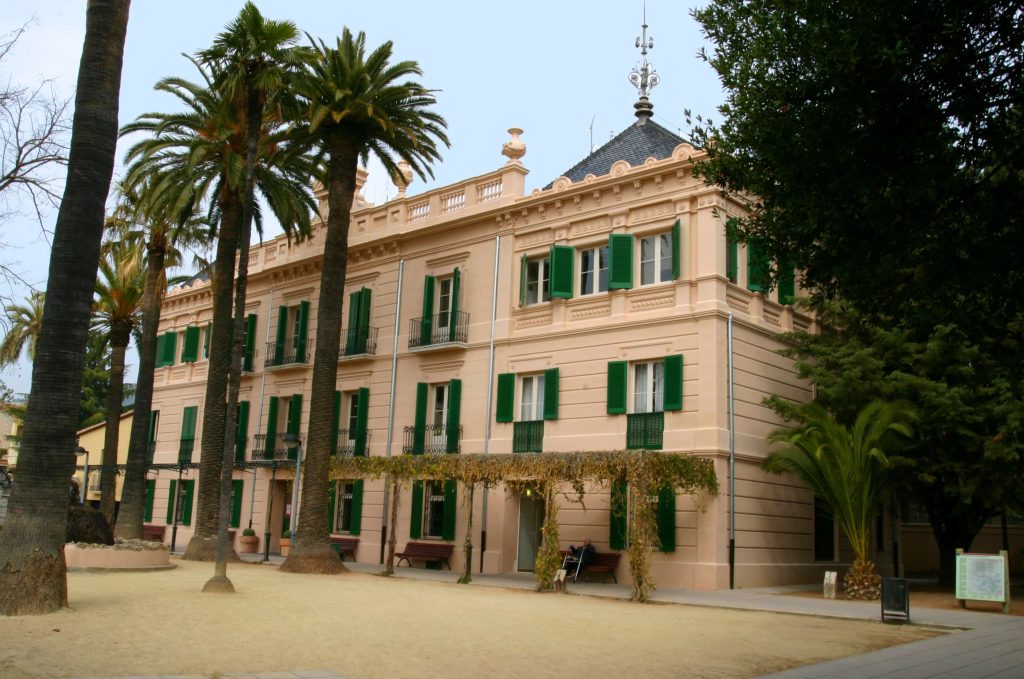
The route passes Cal Targa, where Lluís Companys, former President of the Government of Catalonia, spent several summers. It then continues through the old town to the romantic gardens of Palau Tolrà. Now home to the Town Council, the complex reflects the important role played by the Tolrà family and the textile industry in the municipality’s development. The walk continues to the Church of Sant Esteve, built between 1885 and 1892. Its Neo-Gothic silhouette and impressive size have earned it the popular nickname “Cathedral of the Vallès”. If you would like to see the interior, check service times before visiting.
Adapt the itinerary
If you are interested in local food
To discover more of Castellar, visit Can Casamada, a family-run Catalan farmhouse that has grown Mongeta del Ganxet beans since 1988 and has a small shop selling locally produced food. It is located outside the town centre and opens mainly on Saturday, Sunday and public-holiday mornings, so it is advisable to plan your visit in advance.
With children in summer
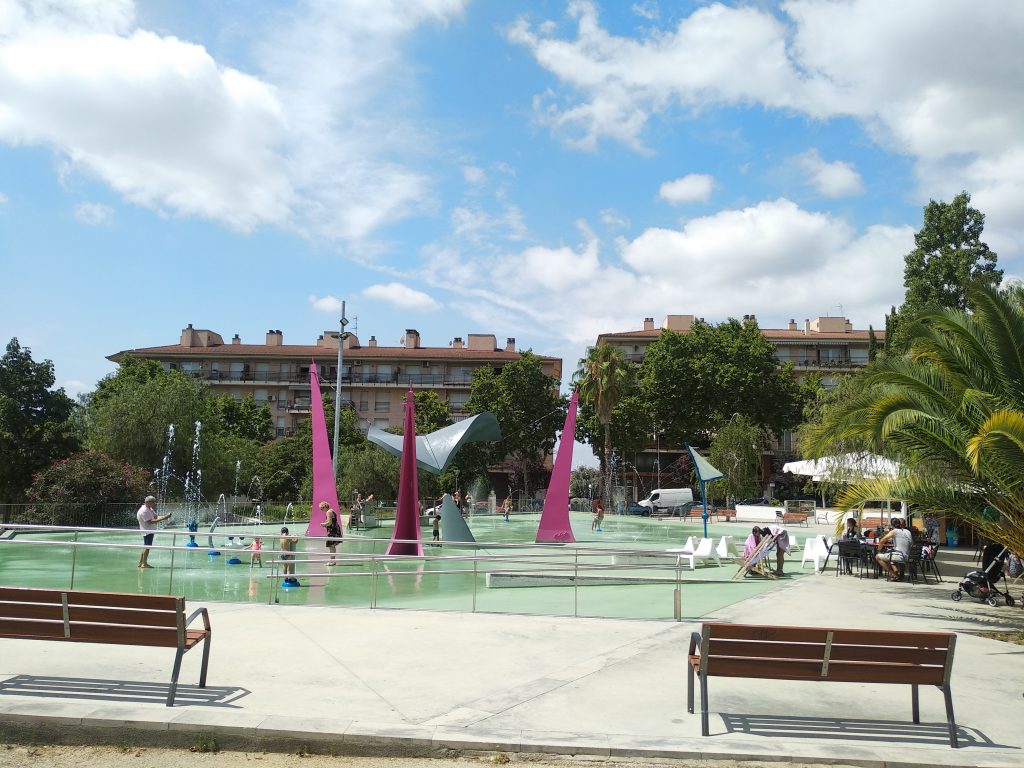
If you are visiting with children during the warmer months, you can end the day at the water-play area in Plaça de Catalunya. It operates seasonally and uses a closed-loop system that allows the water to be reused. Check that it is open before visiting.

More ideas in Castellar del Vallès
- Parc de Colobrers: A green space close to the town centre where you can take a walk, relax or enjoy a picnic.
- Castellar Vell: Medieval heritage and a recreational area in a natural setting.
- Les Arenes: A good starting point for exploring the trails and landscapes around Sant Llorenç del Munt.
Sorry, the comment form is closed at this time.